

Tuesday, 05 April 2022
The National Construction Code (NCC) is released on a 3 year cycle, with the 2019 code being current until the 1st May 2022.
Volume 1 of the code extends to public buildings. Due to critical changes needed to address, for instance, cladding and external wall systems, an amendment to the code was issued in March 2018. The code now includes AS 5113 – 2016, Fire Propagation Testing and Classification of External Walls of Buildings. 尽管该标准已被修订后的规范所接受,但其目前的形式仍在审查之中,而且对我们的利益而言,重要的是,该标准还明确指出,纺织窗帘不被视为外墙或外墙系统的一部分。.
The NCC now provides 2 options for demonstrating compliance:
视为满足:
这是最简单的方法,也可能是纺织品应用的必经之路,但可能需要作为高性能解决方案一部分的某些划线和隔热材料除外。.
规范给出了性能要求,以确定产品是否符合规定。例如,第 C1.10 节涉及大多数室内纺织品,并按最终用途规定了测试方法和性能要求。满足了这些要求,产品就 “视为满足 ”了规范的规定。.
性能解决方案,以前称为备用解决方案:
对于更复杂的项目或安装,可能需要制定性能解决方案,以证明符合性能要求。这可能需要多个利益相关者的参与,如建筑测量师和工程师。该规范鼓励与相关审批机构进行互动,以确保最终解决方案满足文件和最终签核的需要。审批机构需要在不参与解决方案的情况下进行咨询,以便在评估中保持中立。.
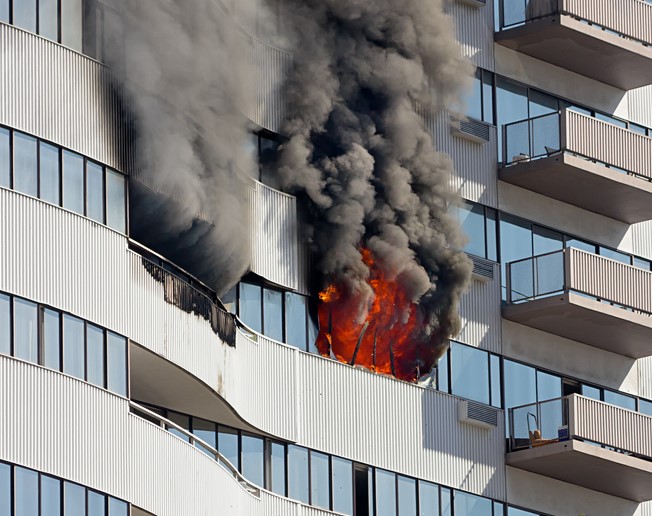
了解火灾与纺织品
The fire performance requirements of interior textiles are outlined in Section C1.10 of the NCC, Australian Standards and also the Temporary Structures Code. Here, we find deemed to satisfy solutions for upholsteries, wall coverings, window furnishings, flooring and more.
澳大利亚建筑规范委员会在其 “从业人员须知 ”火灾介绍中提醒我们注意火灾三角,即火灾发生的三个要素。它们是:氧气、热量和燃料。.
“火是空气中的氧气与燃料释放的气体发生化学反应的产物”
Each fire goes through a growth phase then reaches flashover and becomes fully developed. It then goes into decay during which one or more of the triangle elements are reduced for example fuel is exhausted. Of interest to us is the fuel and the effect or result of its availability when oxygen and heat are present.
纺织品燃料的燃烧性能主要取决于纺织品的成分:
- 纤维素(如棉花或粘胶人造丝)容易点燃并迅速扩散,分解成轻质灰烬
- 尼龙和聚酯等热塑性塑料遇热会收缩,但足够的热量会使其熔化、滴落或燃烧。
- 羊毛或丝绸等蛋白质纤维在移除火源后容易自熄
- 芳纶等特种纺织纤维具有阻燃性,可用于航空航天、某些工作服和运动服等特殊用途。.
欲了解更多信息:
请与我们联系,讨论您的防火检测要求: 电话:03 9371 2400 或发送电子邮件: [email protected]